Edwards launches Indigenous Library for faculty and staff
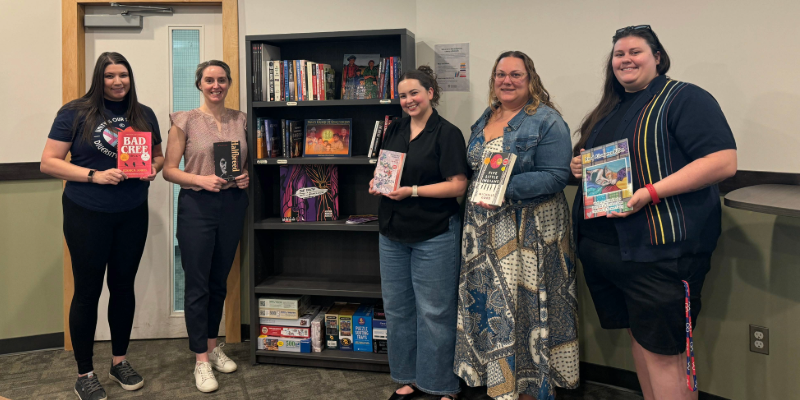
In recognition of National Indigenous History Month, the Edwards School of Business introduced a dedicated Indigenous library in the faculty and staff lounge. This space was designed to foster learning, reflection, and engagement with Indigenous literature, knowledge, and perspectives. On the shelf there are books by Indigenous authors covering history, culture, and contemporary issues, resources on reconciliation and Indigenous ways of knowing, and stories that amplify Indigenous voices and experiences.
Here are a few members of the Edwards community sharing their favourite books by Indigenous authors, along with the insights they took away from their reading.
|
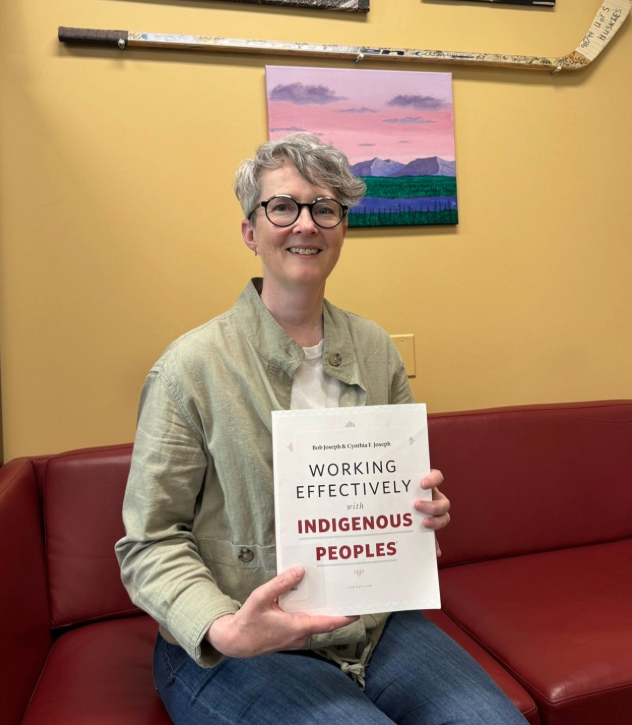
Marjorie Delbaere Former Acting Dean |
Working Effectively with Indigenous Peoples (4th edition) by Bob Joseph and Cynthia F. Joseph. "Working Effectively with Indigenous Peoples is an excellent resource for someone who is beginning to engage directly with Indigenous communities as part of their job or who is interested in deepening their connections with Indigenous Peoples and communities as part of their commitment to reconciliation. The book provides cultural and historical context on a wide rage of topics and situations that helped me to better understand and appreciate the Indigenous perspective. The book also highlights the differences amongst Indigenous Peoples that are often masked when we use the collective term Indigenous. Approaches must be tailored to each group that you are engaging with. The book explores the meanings and differences between consultation and engagement and offers frameworks for risk assessment as well as a model to follow for building effective relationships with Indigenous Peoples. I have found this book incredibly useful in guiding me in my efforts towards reconciliation." |
|
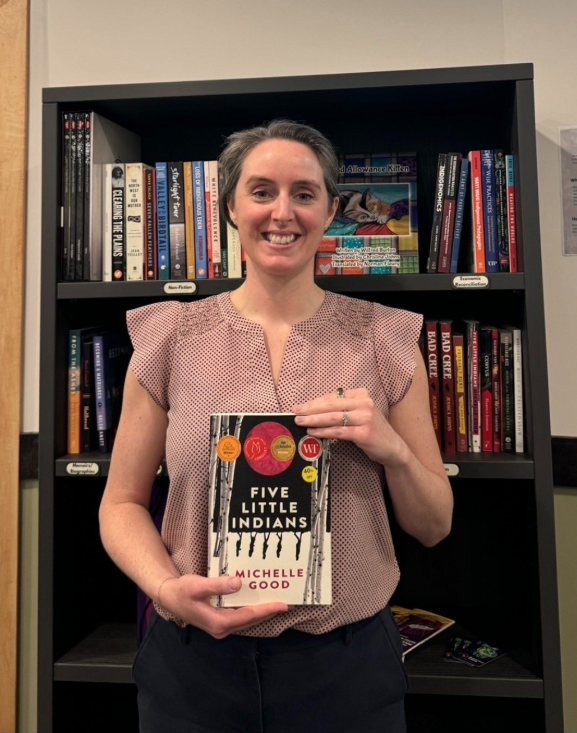
Gillian May Manager of the Administrative Network |
Five Little Indians by Michelle Good. "Five Little Indian’s follows five indigenous survivors of Canada’s residential school system as they attempt to rebuild their lives in Vancouver. Through their stories Good reveals, the deep and lasting trauma caused by these institutions, which is highlighted by the emotional scars of the characters who struggle with their identity, relationships, and mental health. The book also highlights the healing that comes from community and friendship. I recommend Five Little Indians because it portrays healing as a nonlinear journey with each character finding strength in a different way. The book encourages readers to confront the legacy of colonial violence and honour the strength of those who survived it." |
|
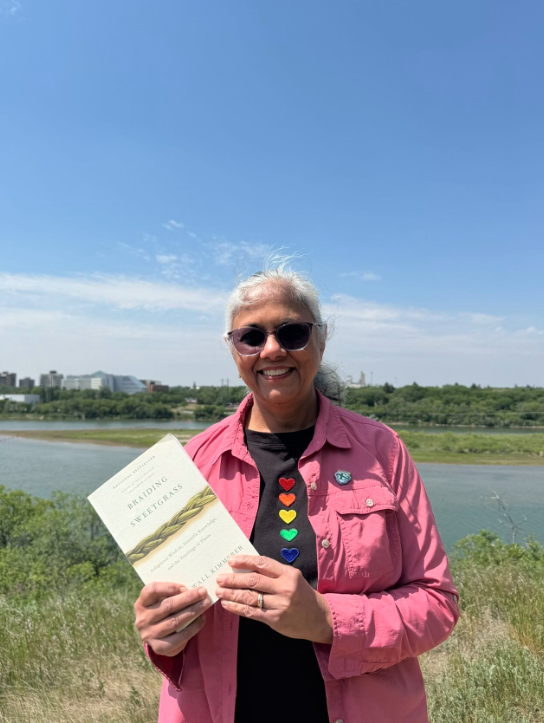
Smita Garg Director of Graduate Programs |
Braiding Sweetgrass by Robin Wall Kimmerer. "Braiding Sweetgrass was my gateway into the concept of the gift economy and a catalyst for exploring more Indigenous voices and wisdom. Robin Wall Kimmerer beautifully weaves together Indigenous knowledge, Western science, and biographical reflections, creating a tapestry that feels both timeless and urgent. Her anecdotes on reciprocity, gratitude, and abundance gently remind us of truths we’ve always known but often forget. Each chapter is a meditation on the interconnectedness of all living things, and a call to care for our shared home—Mother Earth. This book didn’t just inform me; it transformed the way I see the world. A must-read for anyone seeking a deeper relationship with nature and community." |
|
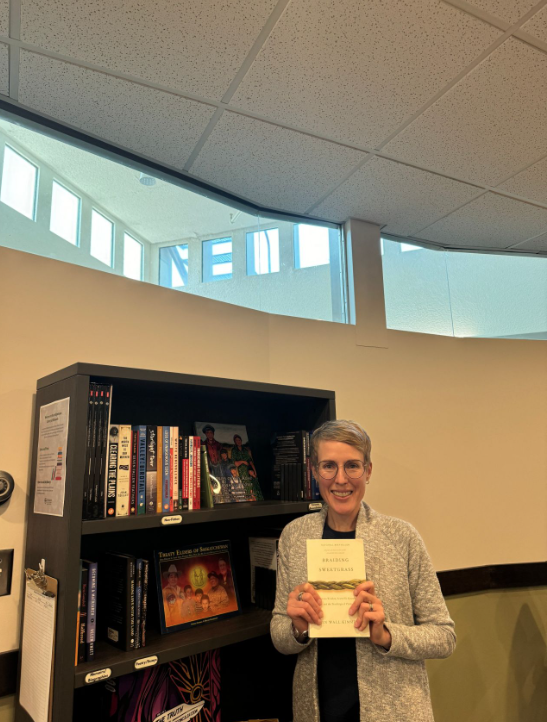
Maureen Bourassa Associate Dean Academic |
Braiding Sweetgrass by Robin Wall Kimmerer. "What I love about this book is that I learned about ecology through the masterful weaving of scientific fact and deeply human stories. The author’s perspective as an Indigenous woman and storyteller as well as a PhD trained scientist allowed me to understand the plant world—and my role within it—in new ways. She writes: “Many Indigenous people share the understanding that we are each endowed with a particular gift, a unique ability. It is understood that these gifts have a dual nature, though: If the bird’s gift is song, then it has a responsibility to greet the day with music. Asking what is our responsibility is perhaps to ask, What is our gift? And how shall we use it?” Achieving sustainable development can often overwhelm. But if we think of our roles as using our unique gifts, perhaps it feels more attainable?" |
|
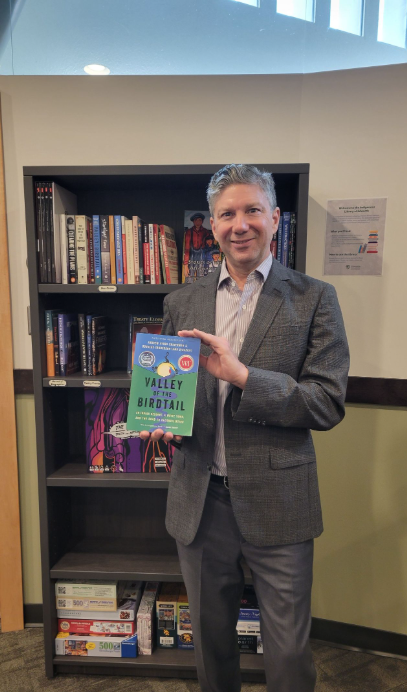
Craig Wilson Associate Dean |
Valley of the Birdtail by Andrew Stobo Sniderman and Douglas Sanderson. “Valley of the Birdtail compares and contrasts neighbouring Indigenous and settler communities, Waywayseecappo First Nation and the town of Rossburn, that share the valley of Manitoba’s Birdtail river. Through a combination of historical analysis and individual storytelling, the book explains how systemic and racist policies and legacies associated with Canada’s colonial past led to vastly different outcomes for the two otherwise equivalent communities. The informative and thought-provoking discussion illustrates some startling historical facts, such as policies that intentionally hinder Indigenous people and communities from purchasing farming machinery and selling farm produce (in contrast to policies that subsidize settler farmers and their communities), never mind the well-documented shortcomings in education experienced by Indigenous people. Such policies clearly lead to a spiral of Indigenous poverty and settler racism that remains today. However, the book ends on a note of hope that by leveling the playing field, Indigenous people and communities are resilient and can overcome generations of imposed decline. I highly recommend Valley of the Birdtail to anyone interested in understanding the historical background to the inequality faced by Indigenous people in Canada and those hoping to embark on a path to reconciliation.” |